本文转载自亞洲靜脈學院(Asian Venous Academy)
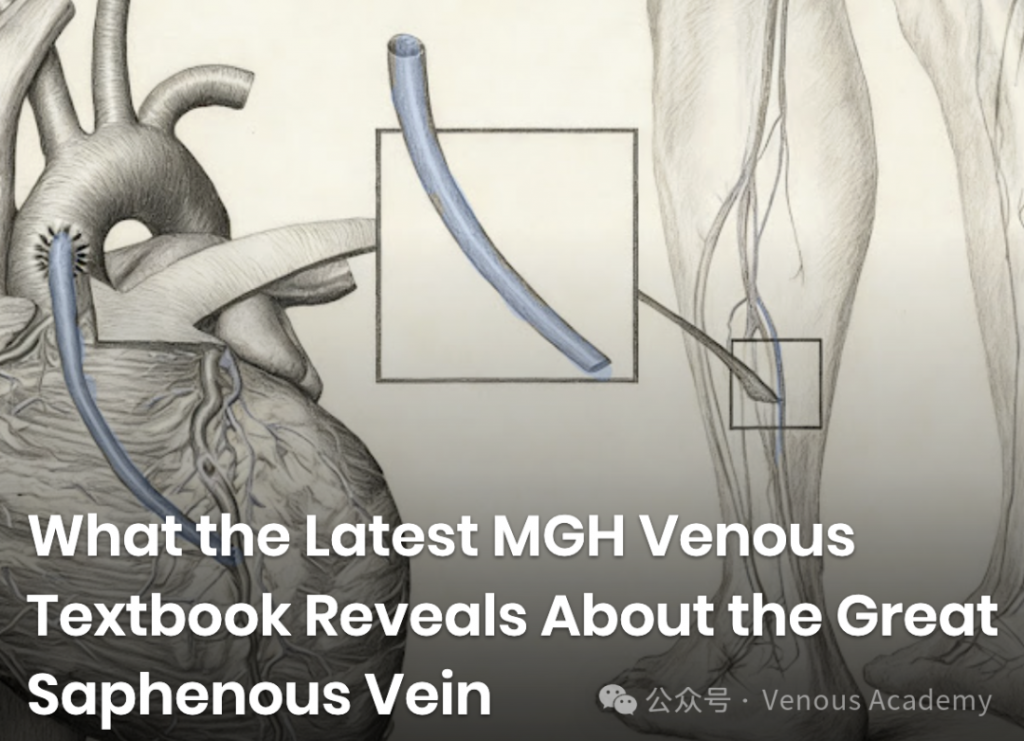
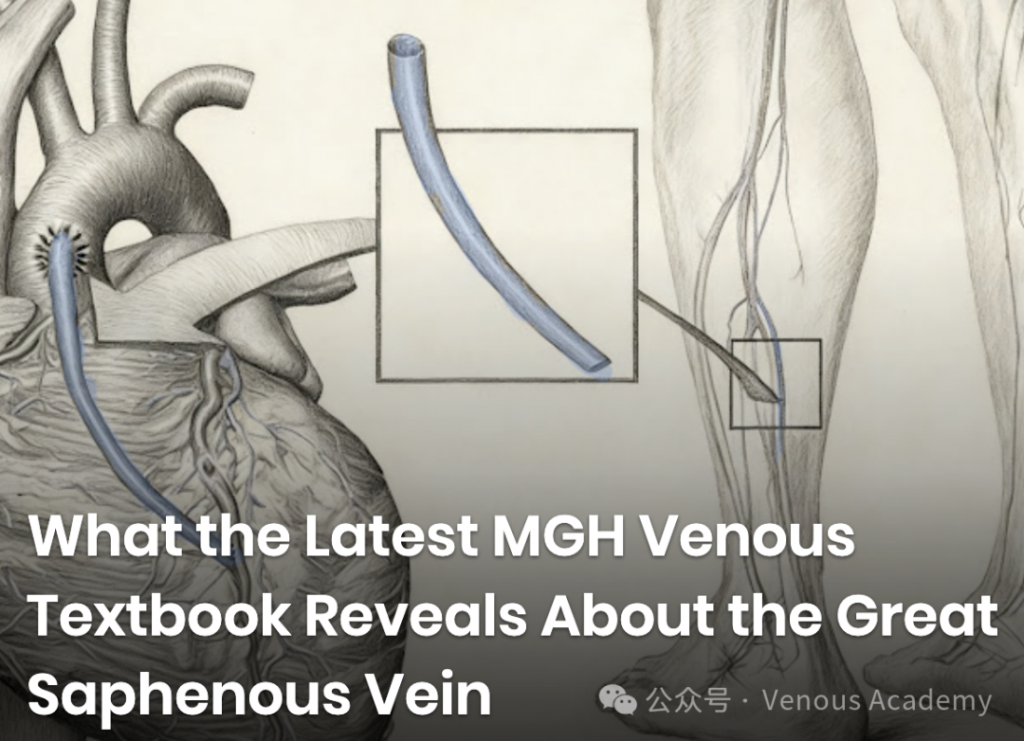
For many years, the great saphenous vein has occupied an uneasy place in clinical practice.
在相当长的一段时间里,大隐静脉在临床实践中始终处于一种相对尴尬的位置。
Once dilated and refluxing, it is often labeled as the problem itself. With the widespread adoption of minimally invasive techniques such as thermal ablation, eliminating the vein has become technically simple, efficient, and increasingly routine. In many clinical settings, decision-making follows a familiar path: symptoms are present, the vein is treated, and the case moves on.
一旦出现扩张和反流,大隐静脉往往被直接视为“问题本身”。随着热消融等微创技术的广泛应用,破坏或消除一条大隐静脉在技术上变得简单、高效,甚至逐渐常态化。在许多临床场景中,决策路径趋于固定:有症状,处理静脉,病例结束。
This approach is effective—at least in the short term. But over time, it has also narrowed how venous disease is understood.
这种处理方式在短期内往往有效,但从更长的时间尺度来看,它也在无形中收窄了我们对静脉疾病的理解。
In many contemporary treatment algorithms for varicose vein disease, the great saphenous vein is approached primarily as a pathological structure, rather than as a functional component of a complex venous system. Clinical judgment is frequently reduced to a single question: does the patient feel better after intervention?
在当代不少静脉曲张的治疗路径中,大隐静脉更多被当作一种病理结构,而非复杂静脉系统中的功能性组成部分。临床判断也常被压缩为一个问题:干预之后,患者症状是否改善?
What tends to fade in this process are questions that require a longer horizon.
在这一过程中,那些需要更长期视角的问题,往往逐渐被忽略。
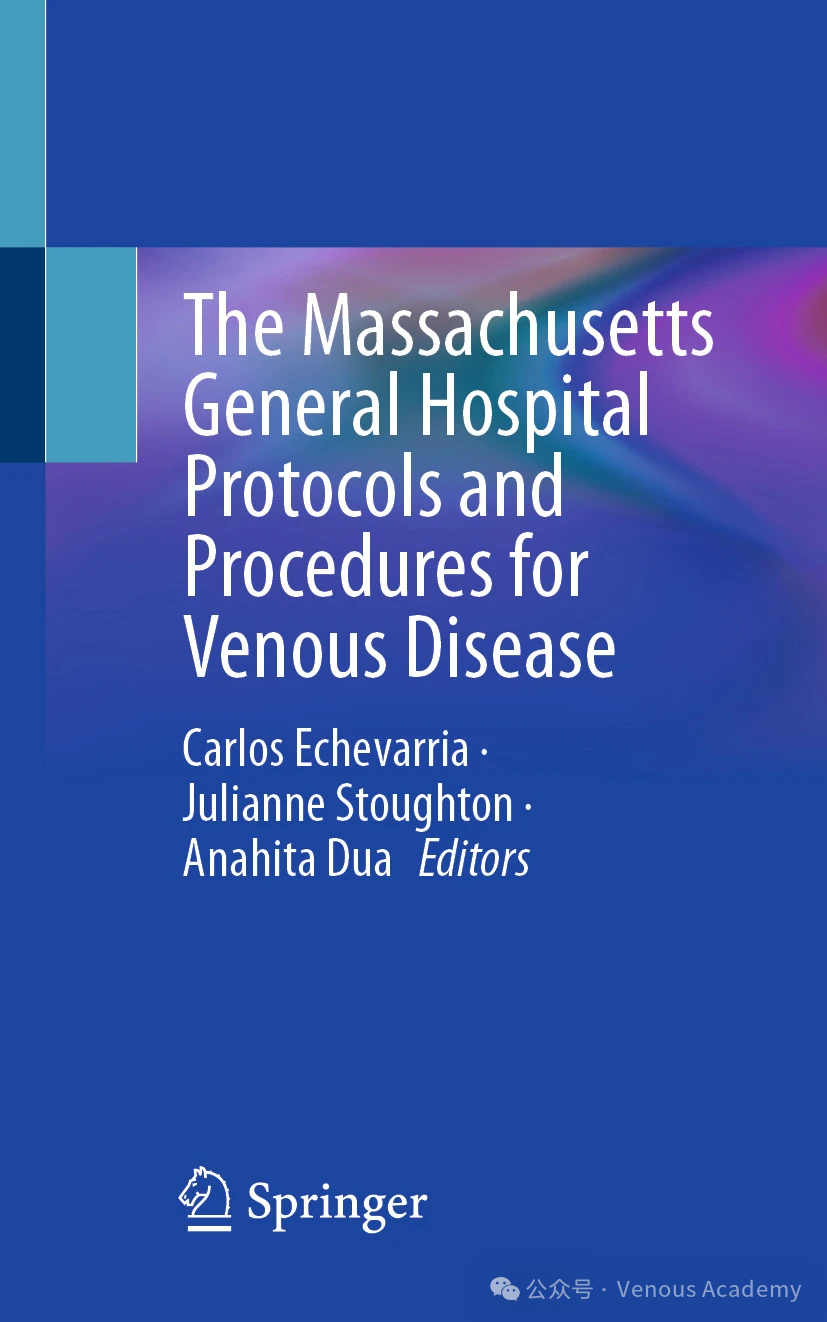
In early 2026, a newly published clinical venous textbook from Springer—The Massachusetts General Hospital Protocols and Procedures for Venous Disease—became available. This book is not a guideline or a consensus statement. Instead, it functions as a teaching-oriented clinical reference reflecting contemporary academic practice within a major U.S. medical center.
2026 年初,Springer 平台出版了一本新的静脉疾病临床教材——《The Massachusetts General Hospital Protocols and Procedures for Venous Disease》。这本书并非指南或共识文件,而是一部以教学和临床规范为导向的教材型参考书,反映了美国大型医学中心当前的学术与实践框架。
What stands out is not the introduction of new techniques, but a subtle shift in how the great saphenous vein is framed.
这本教材引人关注的,并非新的技术,而是在对大隐静脉角色认知上的一种细微转变。
Rather than describing the great saphenous vein solely as a source of pathology, the textbook explicitly acknowledges its significant value as a potential conduit for future vascular reconstruction. The language is careful and restrained. It neither rejects intervention nor advocates universal preservation.
教材并未仅将大隐静脉描述为潜在病理来源,而是明确指出其在未来血管重建中具有重要价值,可能作为潜在的移植血管。这种表述克制而谨慎,既未否定干预,也未将“保留”上升为普遍原则。
Importantly, the textbook does not deny that treating symptomatic superficial venous insufficiency can improve quality of life. Instead, it introduces a broader perspective: before committing to an irreversible intervention, clinicians should consider anatomical variability, venous hemodynamics, and the long-term implications of losing a vein that may later be needed.
值得注意的是,教材并未否认对症状性浅静脉功能不全进行治疗可以改善生活质量,而是在此基础上提出了更宽广的视角:在做出不可逆干预之前,医生应当充分考虑解剖差异、血流动力学特征,以及失去一条未来可能需要使用的静脉所带来的长期影响。
This consideration is particularly relevant in patients who may later require coronary artery bypass grafting, treatment for peripheral arterial disease, or who have coexisting deep venous pathology. In such contexts, the great saphenous vein represents not only disease, but also potential future utility.
这一点在可能涉及冠状动脉旁路移植、外周动脉疾病,或合并深静脉病变的患者中尤为重要。在这些情境下,大隐静脉不仅是疾病的一部分,也可能是一种具有未来用途的血管资源。
This is not a debate about which technique is superior. It reflects a shift in how clinical responsibility is understood.
这并非一场关于技术优劣的争论,而是一种关于临床责任如何被理解的转变。
When an intervention is irreversible, success cannot be measured solely by short-term symptom relief. A more fundamental question emerges: are we addressing the immediate problem, or are we prematurely exhausting a vascular structure that could otherwise be preserved and repurposed?
当干预具有不可逆性时,其成功不应仅以短期症状改善来衡量。更根本的问题在于:我们是在解决眼前的问题,还是在过早消耗一条本可以被保留、被再利用的血管结构?
From this perspective, venous disease is no longer a collection of isolated technical problems, but a dynamic system involving flow redistribution, pressure balance, and long-term vascular value.
从这一视角出发,静脉疾病不再只是孤立的技术问题,而是一个涉及血流重分布、压力平衡以及血管长期价值的动态系统。
This subtle change in mainstream academic teaching does not provide final answers, but it does indicate a direction: a reassessment of the boundary between destruction and preservation in venous medicine.
这种出现在主流学术教材中的细微变化,并未给出最终答案,但清晰地指向了一个方向——静脉病学正在重新审视“破坏”与“保留”之间的边界。
Medical progress often comes not from doing more, but from understanding better. When the great saphenous vein is once again regarded as a structure worth careful consideration, that shift in understanding may quietly reshape the future of venous medicine.
医学的进步,往往并非来自更多的干预,而是源于更深入的理解。当大隐静脉再次被视为一种值得谨慎对待和深入思考的结构时,这种认知转变本身,或许正在悄然塑造静脉病学的未来。
**本文仅用于学术与行业信息交流,不构成任何医疗诊断、治疗建议或临床决策依据。
具体医疗问题,请以专业静脉中心的正式评估为准。
~~**~~

亚洲静脉学院(Asian Venous Academy,AVA)是位于中国香港、面向亚洲及国际静脉疾病专业领域的高水平学术平台。学院聚焦静脉病学相关的前沿资讯、系统化学术培训、能力与专业认证、研究与研发协作、专业出版以及高层次学术会议,服务于在临床决策、学术研究、技术转化、教育培训与产业发展中承担关键角色的专业人士。
官方网站:asianvenousacademy.org
学术合作:contact@asianvenousacademy.org
Asian Venous Academy, based in Hong Kong, is a high-level academic platform dedicated to the field of venous diseases across Asia and the international community. The Academy focuses on advanced professional information, structured academic education, capability and professional certification, research and R&D collaboration, specialized publications, and high-level academic conferences. It serves professionals who play key roles in clinical decision-making, scientific research, technology translation, education, and industry development.